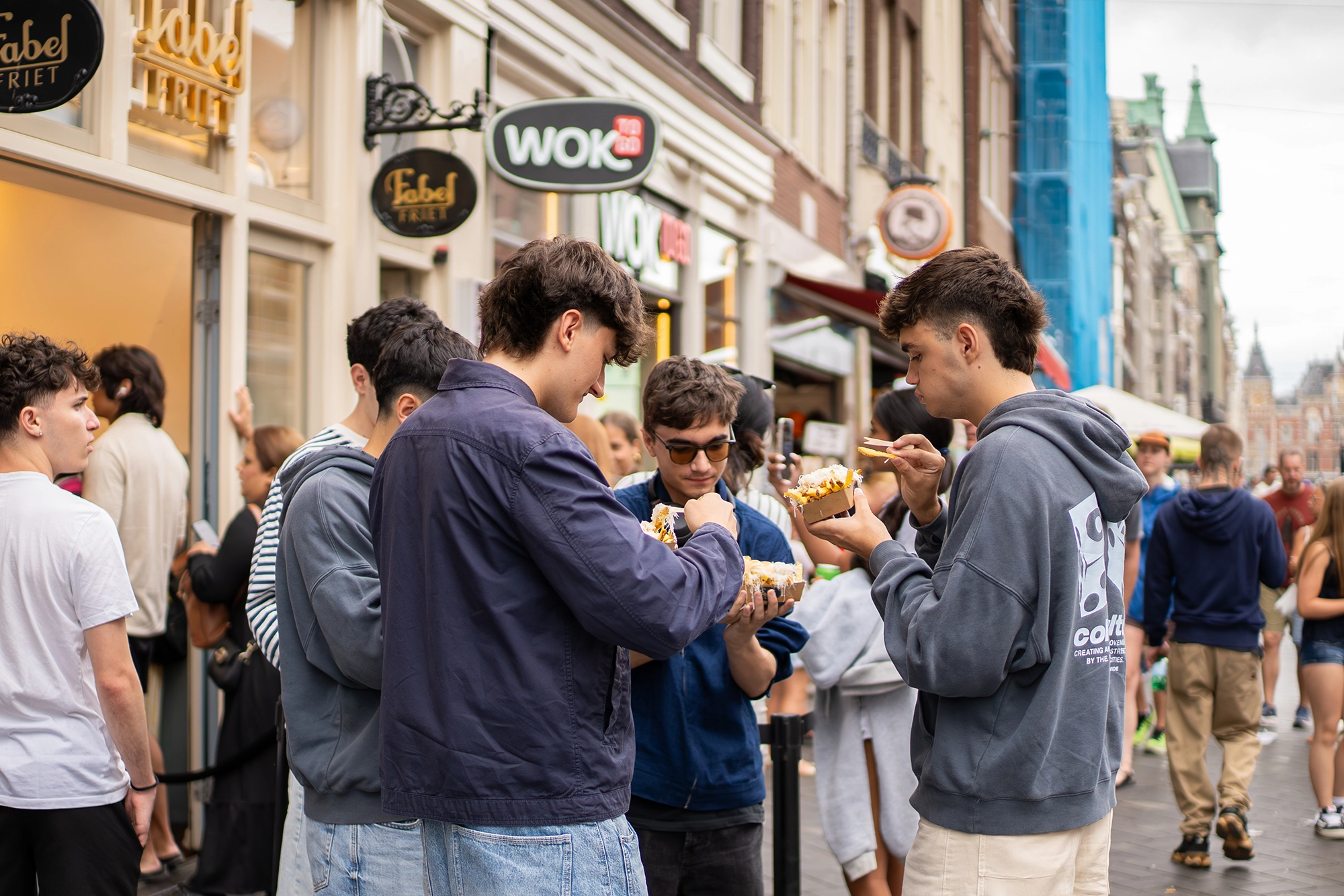
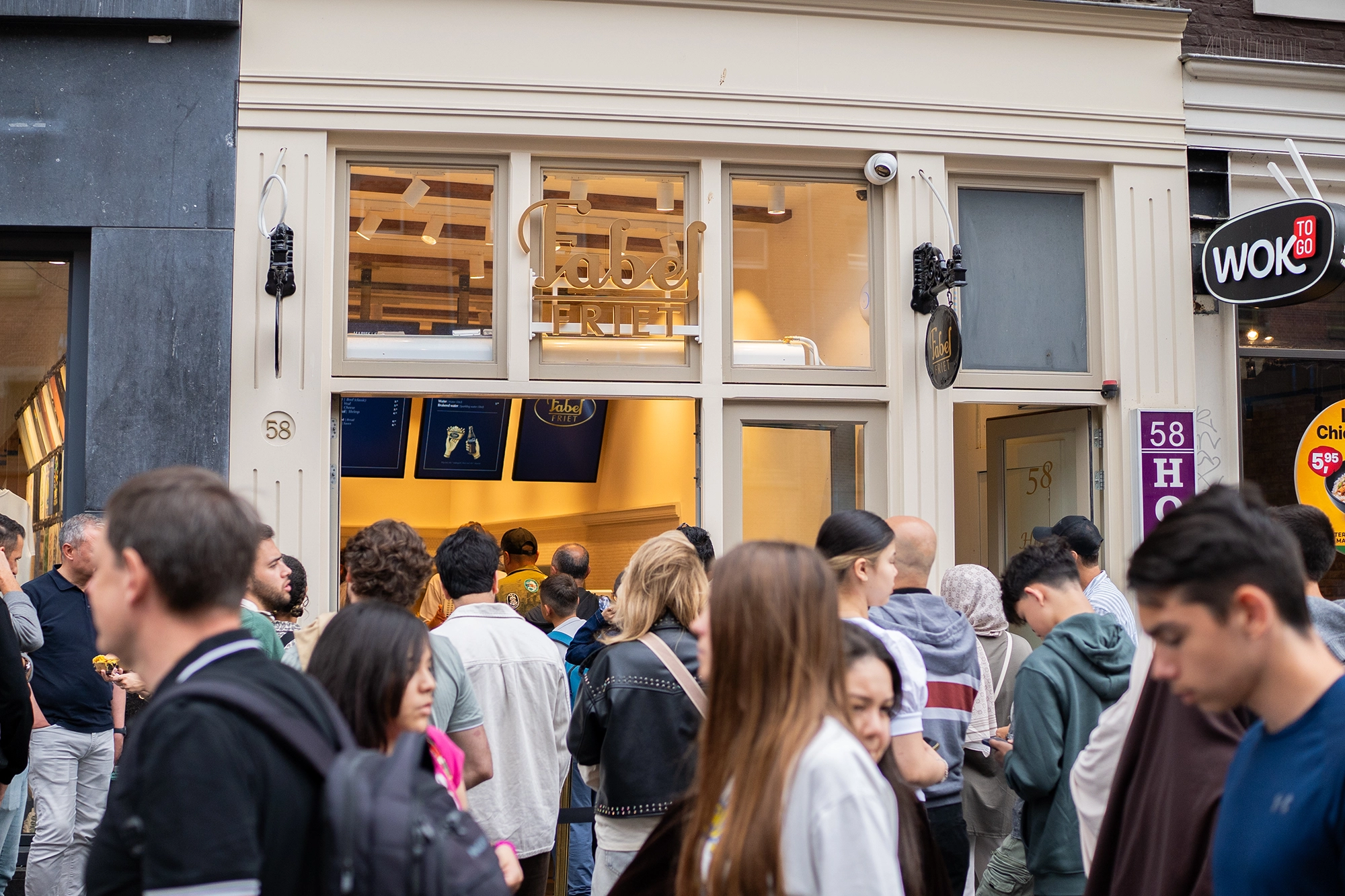
Walk through the center of Amsterdam and chances are you’ll see a long line of people waiting for a serving of fries. Not for a Michelin-starred restaurant. Not for an exclusive pop-up. Just for fries.
Anyone walking past the line notices something striking. People don’t just order their food; they reach for their phone almost immediately. Photos are taken, videos are recorded and reactions are shared. Even before the last fry is gone, the experience already appears on Instagram, TikTok or YouTube Shorts.
That is precisely what has fundamentally changed the hospitality industry in recent years. The customer journey no longer ends when someone receives their order. For many guests, that is exactly where the story they want to share with others begins.
Fabel Friet is a great example of this. The concept shows how product quality, a recognizable look and a strong brand experience can together grow into a destination that people deliberately go out of their way for or line up to visit. Of course it is about excellent fries, but the way the total experience is enjoyed and shared is at least as important.
Every guest today is a brand ambassador
In the past, a satisfied guest would tell their friends or family about their experience. Today, a single short video can reach hundreds of thousands of people within a few hours. A recommendation has shifted from word of mouth to global visibility.
This has major consequences for the way hospitality concepts develop. A restaurant, lunchroom or food concept is no longer judged solely on taste or price. Guests form their opinion based on the complete experience: the atmosphere, the interior, the speed of service, the packaging and even the way a menu is presented. Together, all these elements determine the image someone forms of a brand. Precisely because everything has become visible, consistency matters more than ever.
Brand experience is created in the smallest details
Successful hospitality concepts understand that a brand does not consist of a logo or visual identity alone. A brand emerges from every moment a guest comes into contact with the concept. It starts online, when someone comes across a video. It continues with the first impression of the location, the line, the interior, the presentation of the products and ultimately even the way information is presented.
When all these elements align, an experience is created that people remember. And it is precisely those experiences that get shared. Not because someone asks for it, but because it happens naturally.
Communication has become part of the guest experience
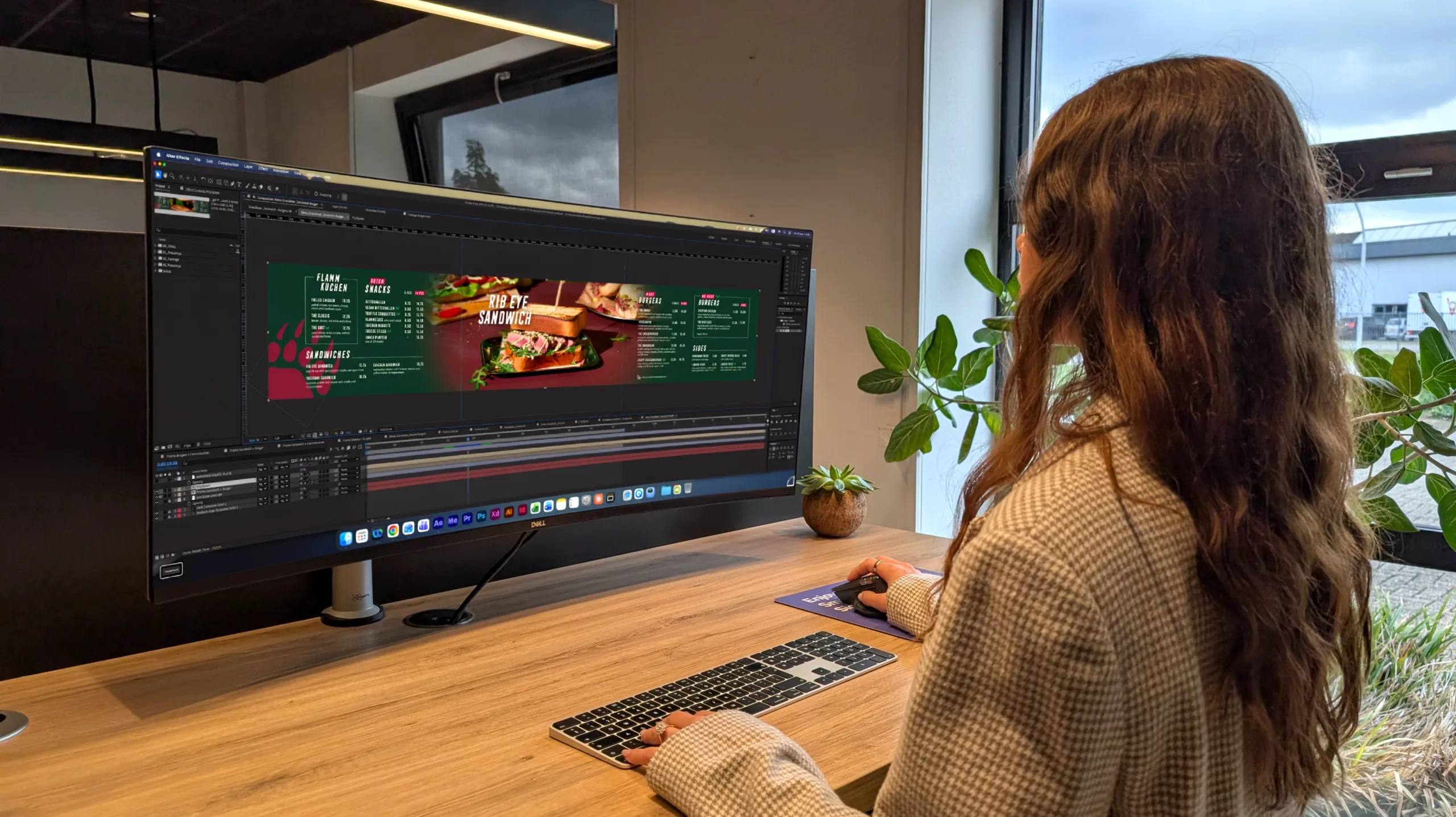
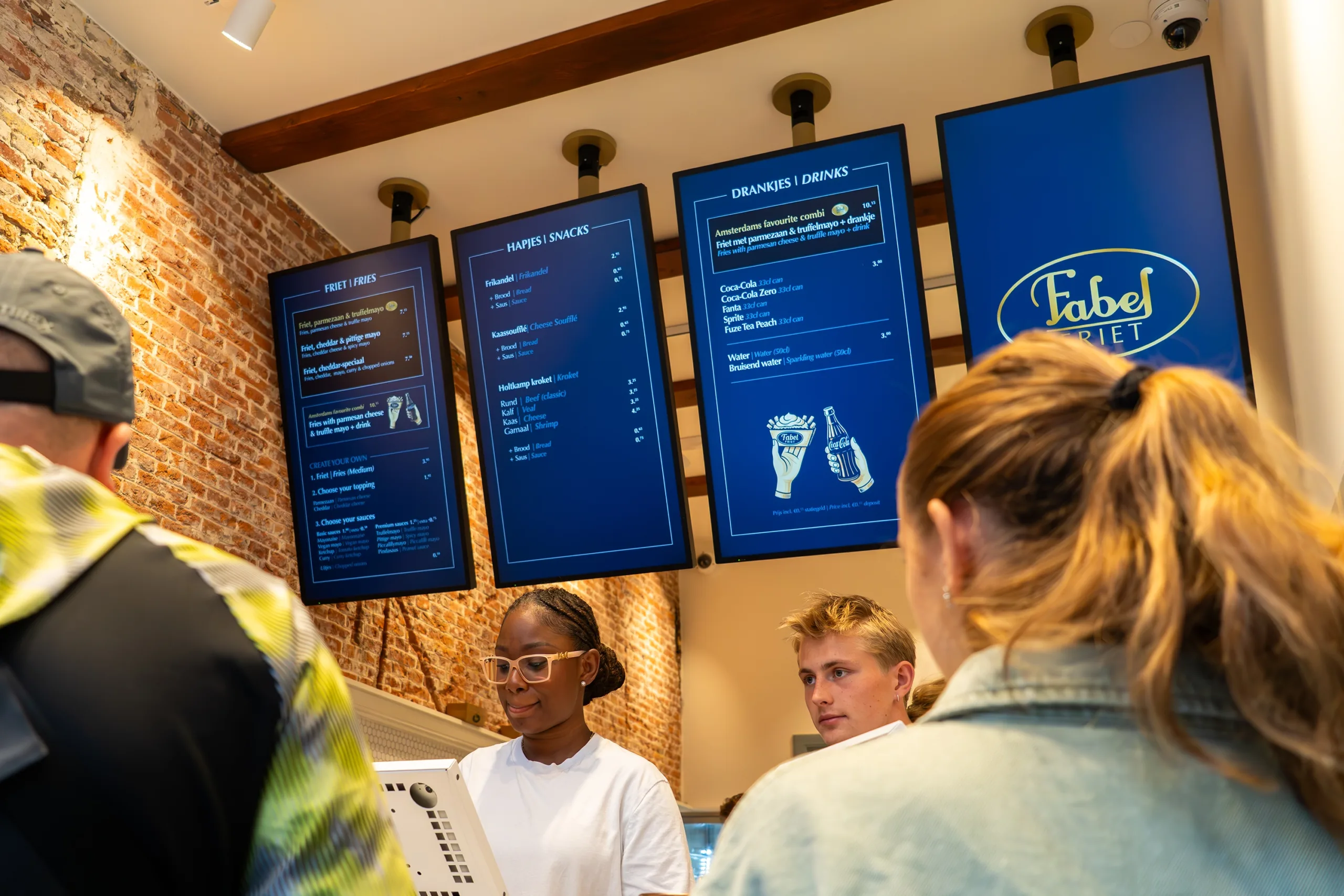
This has also changed the role of visual communication. A menu board long ago stopped being merely a place to display prices and products. It is part of a brand’s image. It says something about the quality, the professionalism and the attention to detail. That is why more and more hospitality concepts are choosing digital menuboards. Not only because they are practical, but because they contribute to a consistent brand experience. New products can be added instantly, temporary promotions are visible within seconds and price changes no longer have to be adjusted manually at each location.
For organizations with multiple locations, that means more than just efficiency. It means control. A single central environment in which content is managed and that keeps every location looking the same. Especially in an era where brands are constantly responding to seasons, trends and current campaigns, that flexibility has become indispensable.
Technology that does not distract the customer
The best technology works entirely unobtrusively in the background. Guests do not notice that a price has been updated automatically or that a temporary promotion has gone live at all locations simultaneously. They simply experience that the information is correct, the menu is clear and the presentation matches the quality of the concept. That is exactly how it should be. Technology should support the guest experience, not dominate it.
At Fabel Friet, too, Skippify’s digital menu boards contribute to a consistent presentation that matches the brand’s image. Not because technology determines a concept’s success, but because a strong brand experience calls for a presentation that is just as carefully crafted as the rest of the experience. Discover how this works together with our broader managed signage.
The hospitality of tomorrow
The influence of social media will only continue to grow in the years ahead. New trends emerge faster than ever and guests expect brands to communicate just as flexibly as they do.
For hospitality entrepreneurs, that means the bar has been raised. Not only does the product have to be excellent, but every step in the customer journey must contribute to the same brand experience. That calls for attention to detail, consistent communication and technology that makes changes easy without losing sight of the guest.
Digital communication does not replace hospitality. It makes hospitality visible. People do not just share what they eat. They share how a brand made them feel.
Frequently asked questions
Why does social media have such a big influence on the hospitality industry?
Social media has turned every guest into a potential ambassador. A positive experience is not only shared with friends or family, but can reach thousands or even millions of people in a short time. As a result, brand experience and presentation play an ever-greater role in the success of hospitality concepts.
Why are digital menu boards more than just a digital menu?
Digital menu boards are an extension of the brand identity. They ensure that products, prices and campaigns are always up to date and contribute to a consistent look at every location.
Why are more and more hospitality chains choosing centralized content management?
When an organization has multiple locations, it is essential that information is identical everywhere. With centralized content management, changes are rolled out all at once, which prevents errors and keeps the brand experience the same everywhere.
What does Skippify do for hospitality concepts like Fabel Friet?
Skippify provides digital menu boards and managed signage for Foodservice & QSR. Through a single central environment, customers manage content for all locations at once, from current prices to temporary campaigns.
 Skippify