Why a good digital menuboard is so much more than a pretty design.
A few nice food photos. The products and prices alongside them. Everything neatly on brand. And the digital menuboard is done. If only it were that simple. A good digital menuboard is much more than a digital version of a traditional menu.
In just a few seconds, a guest has to take in the offering, recognize products, understand prices, and be tempted into making a choice. And almost every detail counts — from color, photography, and typography to image size, positioning, order, and motion.
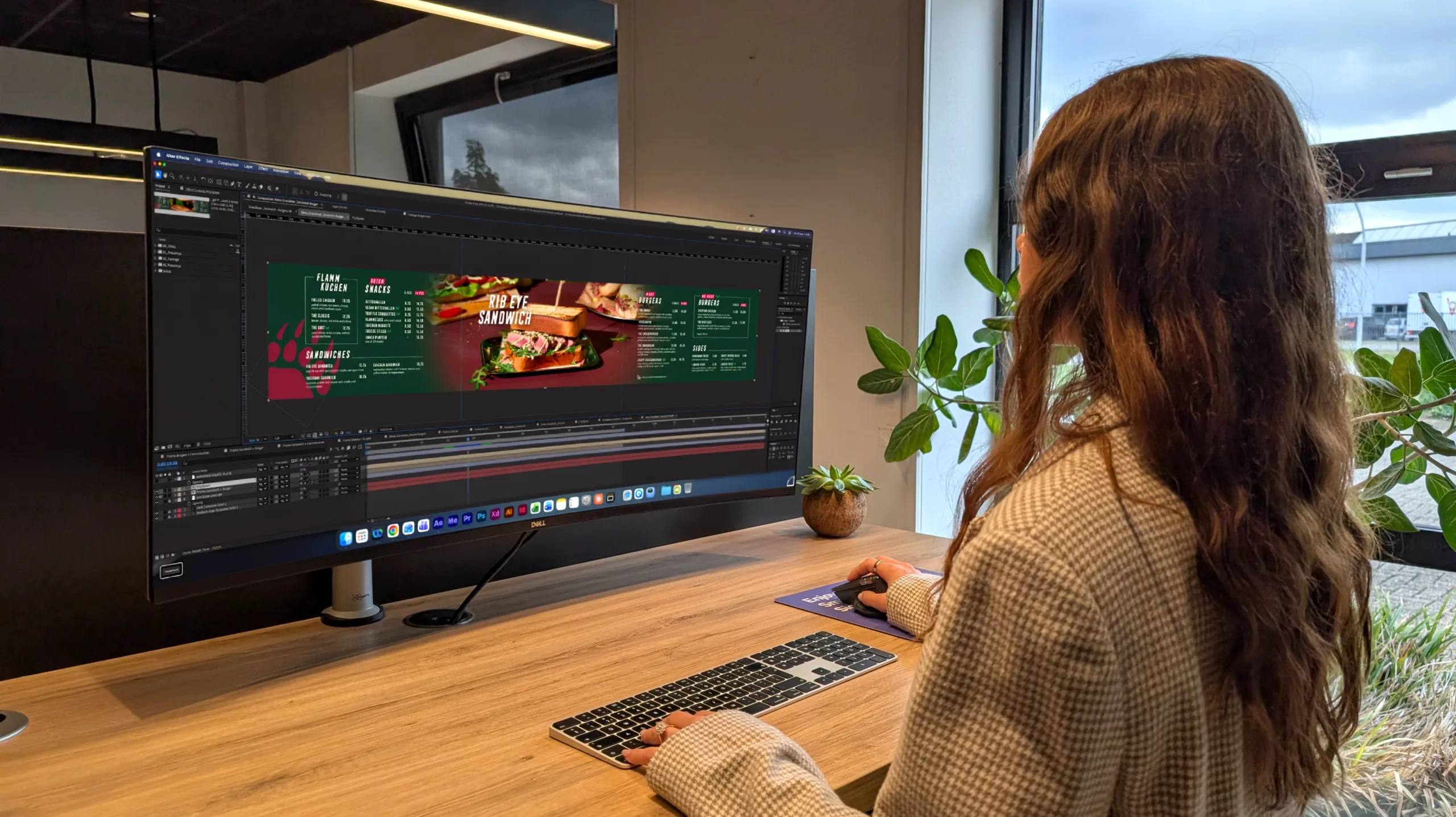
That’s the craft of our in-house Studio.
From brand to digital menuboard
A strong brand identity is the starting point, but it can rarely be translated one-to-one to a digital menuboard. The context is simply different. A guest often views a menuboard from several meters away and has limited time to process information. At the same time, you want to present products attractively, communicate prices clearly, and create room for promotions and commercial accents.
That’s why our designers don’t just translate a brand’s visual identity — they also look at the function of the menuboard. What should stand out first? Which products deserve more space? How do we structure the different categories? Where do we place prices? How do we make multiple screens work as one whole? And how much information can someone process in a short time? It’s precisely the combination of all those design choices that determines whether a menuboard works.

Food has to tempt
In foodservice, imagery naturally plays an important role. A good food photo doesn’t just show what someone can order — above all, it has to create an appetite. That’s why our Studio has its own food photography and videography in-house. It means that, even during a shoot, we can account for the final application. Styling, composition, camera angle, lighting, and cropping are all tuned to the way the product will later appear on screen.
A burger that fills almost an entire screen as a hero calls for different imagery than a product within a menu overview. And video follows its own set of rules again. That’s how designing a good menuboard sometimes already begins during the photo shoot.
Design with a commercial purpose
Beautiful design alone isn’t enough. A menuboard also has a clear commercial purpose. Visual hierarchy determines what someone looks at first. A new product can be given more attention, a premium choice can be positioned more prominently, and a combo or limited-time promotion can be made deliberately more visible.
At the same time, calm is at least as important as attention. Not every product needs to be big. Not everything needs to move. And not every available square centimeter of a screen needs to be filled. Knowing what not to show can actually make a design stronger.
Digital screens also give us the ability to work with motion — from subtle animations and short food videos to a full take-over in which several screens briefly show one campaign together. Here, too, the rule applies: movement has to add something. Otherwise it only distracts.
An ice cream store is not a gas station shop
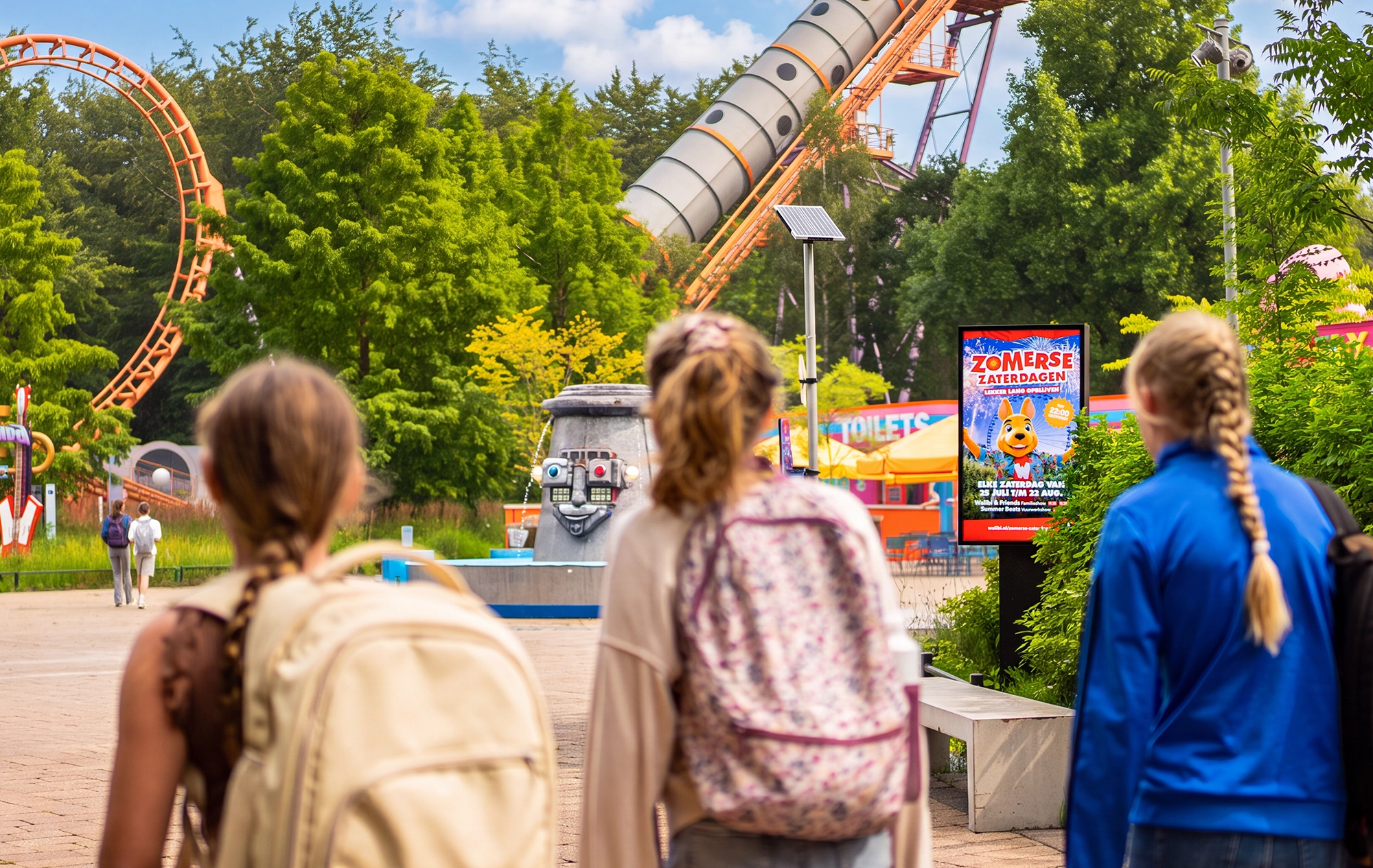
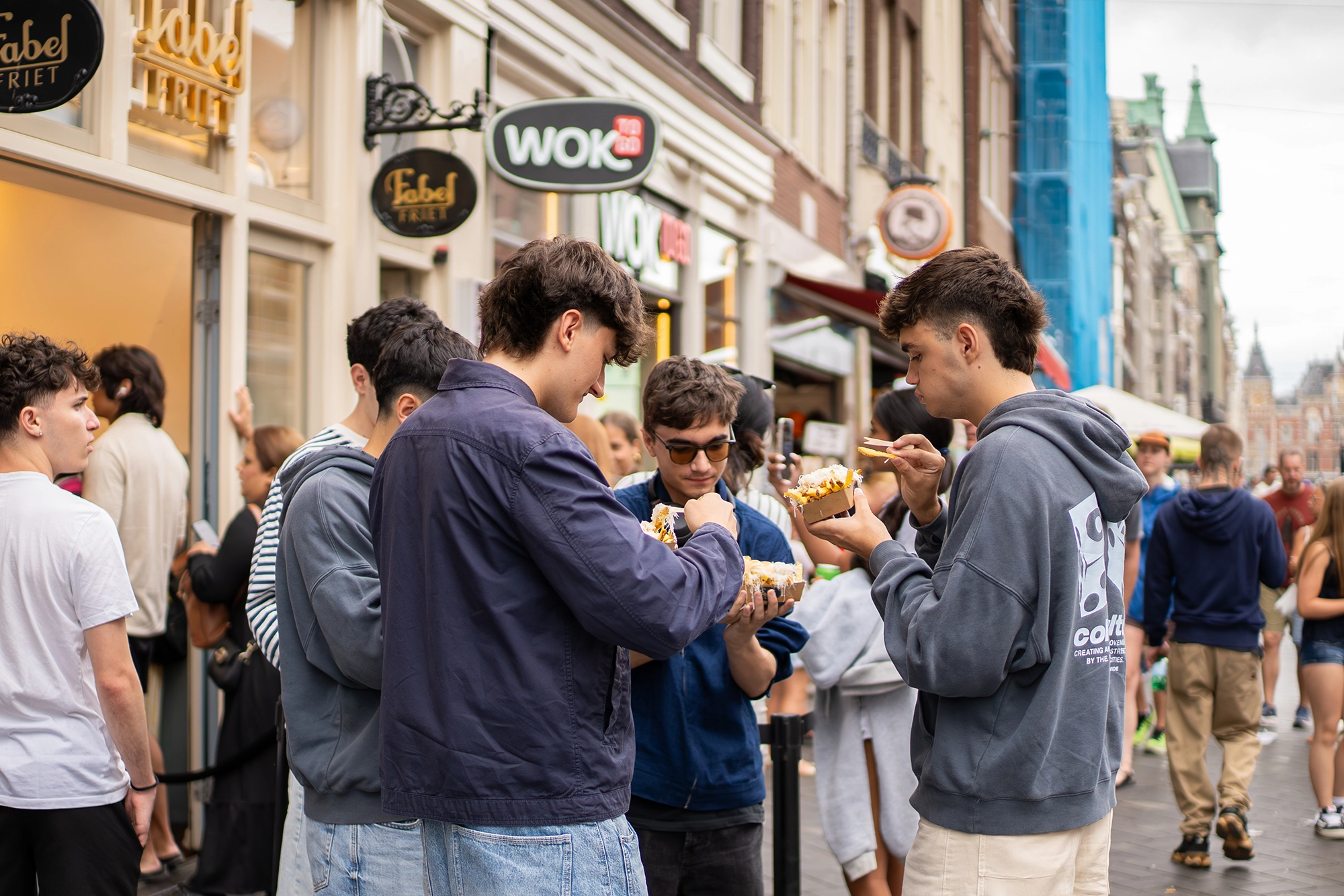
There’s no standard formula for a good digital menuboard. A specialty fish shop calls for a different approach than a gas station shop. An ice cream store works differently than a QSR, and a menuboard in a theme park sits in a completely different environment and dynamic again.
At a gas station shop, for example, speed matters: the visitor wants to take in the offering quickly. In an ice cream parlor, visual temptation plays a much bigger role. And at a busy leisure location, visitor flows, peak moments, and readability from a distance can be decisive for the design.
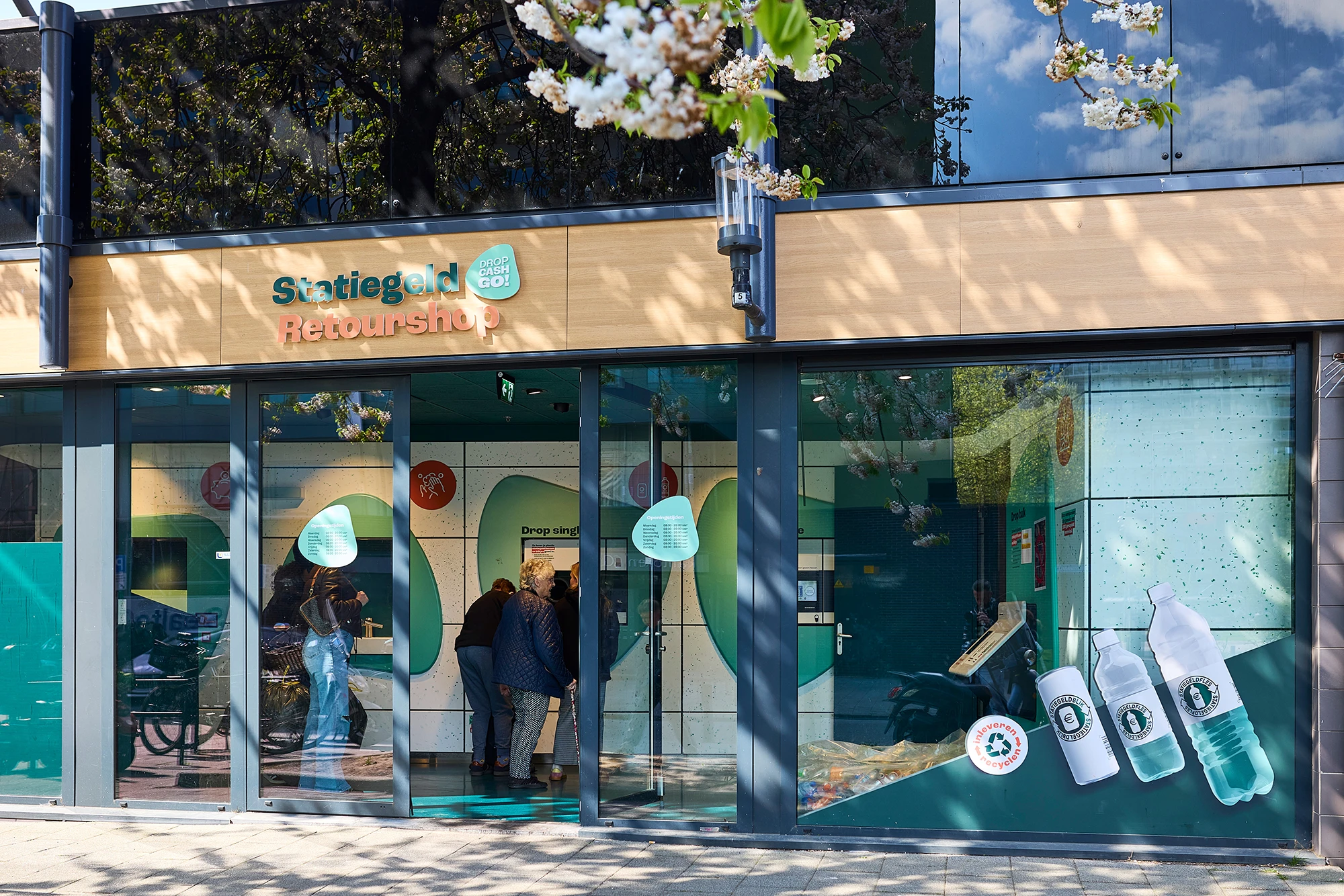
Our Studio works for clients across all four of Skippify’s segments: Petrol & Mobility, Foodservice & QSR, Leisure & Entertainment and Retail & Experience. That diversity matters. Over the years, we’ve designed for many different concepts, assortments, and situations. As a result, our designers look not only at the brand, but also at the environment in which the menuboard has to do its job.
Who is standing in front of the screen? How much time do they have? What do they want to know? And which information should get the most attention at that moment? Only then does the real design work begin.

No Skippify style. But Skippify expertise.
So anyone who watches our latest showreel won’t see a fixed design style that we apply over and over. And that’s exactly the point. Some brands call for bold colors and lots of energy. Others for a premium, understated look. Sometimes food photography takes center stage, while for another concept it’s typography, graphic elements, or motion that play a bigger role. The end result shouldn’t feel like a Skippify menuboard.
It should feel like our client’s brand. Our expertise lies precisely in that translation — in combining brand, assortment, environment, and commercial objectives into one compelling digital design.
10+ years of menuboard experience
Skippify has now been working on digital menuboards for more than 10 years. Over that period, we’ve had the chance to work for a wide variety of food, hospitality, petrol, retail, and leisure concepts. As a result, we’ve built not only an extensive portfolio, but above all a great deal of specialist knowledge.
We know what happens when an image is used too small, a screen holds too much information, or a promotion sits in the wrong place. But also how powerful a product can become when photography, design, and motion come together just right.
Within our in-house Studio, we bring that experience together with a range of creative disciplines: concept, graphic design, food photography, video, and motion. That’s why, for us, digital menuboard design isn’t something to be filled in at the end of a project. It’s a specialism.
From creation to worry-free management
After the creative development, our Studio can also take care of day-to-day content management. New promotions, campaigns, seasonal products, and visuals can be
prepared, scheduled, and published remotely. At the same time, prices and product information, for example, can be updated automatically through an integration with the back office. That’s how we combine creative craftsmanship with smart automation.
As a result, the client doesn’t have to deal with layouts, screen formats, uploads, or daily content changes. We make sure the menuboard stays current and that the design is applied well in practice, too.
Watch our latest showreel
Over the past few months, our Studio has once again worked on a large number of digital menu board designs. Our latest showreel brings a selection of them together: different brands, industries, and styles, from colorful and bold to premium and understated. And it’s exactly that diversity that shows what our Studio is good at.
Not creating one recognizable Skippify style, but finding, for every brand anew, the best way to bring food, brand, and commerce together on screen. That’s the art of digital menuboard design.
Get started with your digital menuboard
Curious about the possibilities for your concept? Schedule a meeting with our team or visit our experience center in Zaltbommel to experience the possibilities live.
Frequently asked questions
What exactly is a digital menuboard?
A digital menu board is a digital screen that displays the offering, prices, and promotions of a hospitality, retail, or leisure concept, and that can be managed and updated remotely. Unlike a static menu, it can automatically adjust imagery, order, and content to the time of day, stock, or campaign.
Why is good design so important for a menuboard?
Because a guest has only a few seconds to take in the offering. Color, photography, typography, order, and motion together determine whether someone can make a choice quickly and easily. A menuboard that only looks nice but isn’t built around that function works less well in practice.
Does Skippify also handle the photography for a menuboard?
Yes. Our in-house Studio has its own food photography and videography, tuned to the final application on screen. Styling, composition, and lighting are already determined during the shoot, with the end result in mind.
Which industries does Skippify design menuboards for?
We work across all four of Skippify’s segments: Petrol & Mobility, Foodservice & QSR, Leisure & Entertainment and Retail & Experience. Each segment calls for a different approach, from speed at a gas station shop to visual temptation at an ice cream parlor.
Can Skippify also take over the day-to-day content management?
Yes. After the creative development, our Studio can prepare, schedule, and publish promotions, campaigns, and seasonal products, and automatically update prices or product information through an integration with the back office.
 Kelly Nitert